“The last company told me my heat exchanger is cracked. Is that real, and can I keep running the furnace until I decide?” We hear some version of that question every winter. The short answer: a crack is a real safety problem when it is confirmed, the furnace should stay off until it is fixed, and you are entitled to see the proof. Below are the questions about a cracked heat exchanger Rialto homeowners bring to us, answered the way we would at your kitchen table.
What is a heat exchanger, and why does a crack matter?
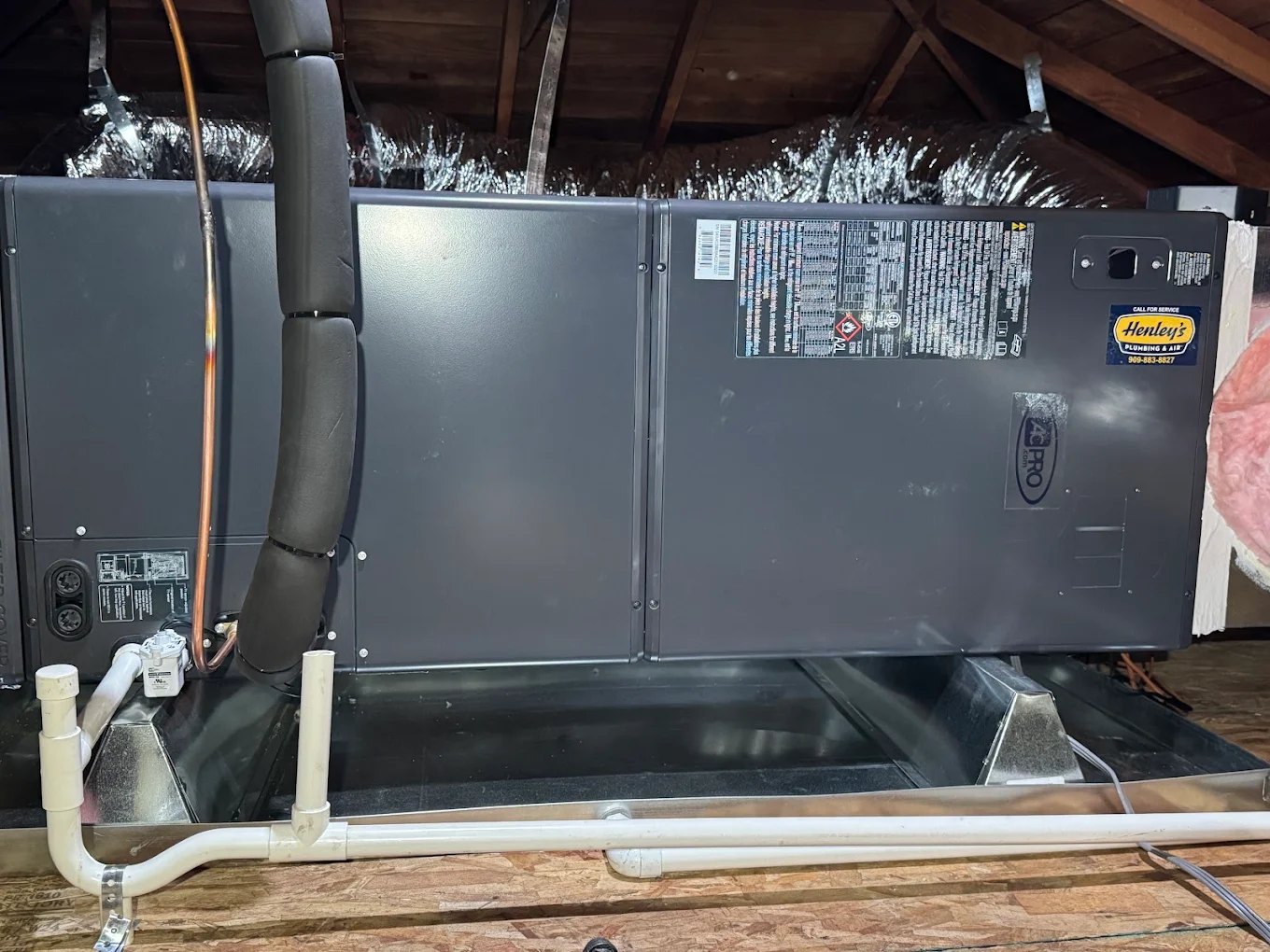
Inside a gas furnace, the burners fire into a set of metal chambers or tubes. That metal gets hot, the blower pushes house air across the outside of it, and the warm air goes out your vents. The flames and exhaust stay on the inside and leave through the flue pipe. The heat exchanger is the wall between the fire and the air your family breathes.
When that wall cracks or rusts through, two things can happen. Exhaust, which can include carbon monoxide, has a path into the airstream. And air from the blower can push back through the opening and disturb the burner flame, which can cause flame rollout or lockouts. Not every crack leaks the same amount, but none of them get better with time.
Told your furnace is unsafe and want a second set of eyes? We will look at it, show you what we see, and explain your choices. $59 HVAC diagnostic, waived if you approve the repair. Call (909) 883-8827 or request a heating visit.
What makes a heat exchanger crack in the first place?
Metal that heats up and cools down thousands of times eventually fatigues, so age is the biggest factor. Things that make the metal run hotter than it was designed for speed that up:
- Restricted airflow. A clogged filter, closed or blocked supply registers, or ductwork that is too small all let heat build up in the exchanger.
- Short cycling. A furnace that starts and stops every few minutes, often because it is oversized for the house, goes through far more heat-up and cool-down cycles.
- Corrosion. Moisture from combustion, or a high-efficiency unit with drainage problems, can rust the metal from the inside.
The fix for most of these is boring: change the filter on schedule, keep registers open and furniture off the returns, and have the system looked at before the cold weather settles in.
What signs would I actually notice at home?
Many cracks give no obvious sign at all, so a working CO alarm is worth more than any symptom list. When there are clues, they tend to look like this:
- The burner flame wavers, lifts or changes color the moment the blower kicks on.
- Soot or scorch marks around the burner area or the front of the furnace.
- The furnace keeps shutting itself off or locking out, sometimes with a rollout switch tripped.
- A CO alarm chirps or sounds while the heat is running.
- People in the house get headaches, nausea or drowsiness that ease once they step outside.
Any one of those is worth a call. If the furnace is simply not keeping up and none of the above applies, our checklist for a furnace that is not heating covers the simple things to rule out first.
How does a tech confirm a cracked heat exchanger in Rialto?
A good diagnosis uses more than one test, because some cracks hide behind baffles or on the back side of a tube where no light reaches. Expect a tech to:
- Watch the burner flame before and after the blower starts.
- Look inside with a light, mirror or inspection camera through the burner openings or flue.
- Run a combustion analysis and check for CO at the supply registers and around the furnace.
- Check the venting, the filter and the temperature rise, so the cause gets fixed and not just the symptom.
On any cracked heat exchanger Rialto visit, it is fair to ask for a photo or video of the crack, where it is, and the readings that back it up. A camera does not catch every crack, and a tech who is honest about that is a good sign. If you got a replacement quote without any of that, a second opinion is reasonable. Our furnace and heating repair team is happy to take that look.
My CO alarm went off. What do I do right now?
Do not try to find the problem. Get everyone, pets included, out of the house and into fresh air. Once you are outside, call 911 if anyone feels sick, and call the gas utility. In Rialto that is SoCalGas, at 1-800-427-2200. Stay out until the fire department or the utility tells you it is safe to go back in.
A few more things to keep in mind:
- Do not remove the furnace’s inner panels or the sealed burner cover to look for a crack. Those parts keep flames and exhaust where they belong.
- Do not reset a furnace over and over after a lockout. The safety switch tripped for a reason.
- If the furnace is shut off for repairs, never heat the house with a gas oven or a grill. Plug a space heater straight into a wall outlet and keep it clear of beds, curtains and furniture.
- California requires CO alarms in homes with gas appliances or an attached garage. Put one on every level and near the bedrooms, test them monthly, and replace any unit past its expiration date.
SoCalGas has a clear page on carbon monoxide signs and what to do, and the EPA explains what carbon monoxide is and where it comes from.
Repair or replace: what are my options?
Once a crack is confirmed, there are usually two paths. The first is replacing the heat exchanger itself. Many manufacturers cover heat exchangers longer than other furnace parts, so pull out your warranty paperwork or the registration before you decide. Labor is often a separate cost even when the part is covered, and on some models the job takes most of the furnace apart.
The second path is a new furnace. That tends to make sense when the unit is older, the part is not covered, or the system has other problems stacking up. We offer free HVAC replacement estimates, so you can put the two numbers side by side. Either way, the furnace should stay off until the work is done.
For more on what we handle in town, see our heating and cooling service in Rialto page, or the wider San Bernardino County service area.
Quick answers to other questions we hear
Can I run my furnace with a cracked heat exchanger?
No. Once a crack is confirmed, keep the furnace off until the heat exchanger or the furnace is replaced. Exhaust can reach the air you breathe, and a working CO alarm is a backup, not a fix.
Can a cracked heat exchanger be welded or sealed?
Not as a safe, lasting repair. Manufacturers do not approve patching a heat exchanger, so the options are a replacement heat exchanger or a new furnace.
Will a CO alarm always catch a cracked heat exchanger?
Not always. Some cracks leak very little or only under certain conditions. An alarm is your safety net, and an inspection by a technician is how the crack actually gets found.
Is a cracked heat exchanger covered by warranty?
Often the part is, for longer than other furnace parts, but terms depend on the brand, the model and whether the unit was registered. Labor is usually not included, so check your paperwork before deciding.
Furnace shut off and waiting on an answer? Call (909) 883-8827 or send us the details online. Free HVAC replacement estimates. Ask about financing.