Finding a puddle under your water heater is stressful, especially in a garage or closet next to your things. Take a breath. There are a few safe steps that stop the damage while you figure out what’s next.
Henley’s says (quick answer): Turn off the water heater’s power or gas, close the cold-water supply valve on top of the tank, and keep the area dry. Then find where the water is coming from. A drip from the drain valve or relief-valve pipe can often be fixed, but water coming from the tank itself usually means the tank has rusted through and needs to be replaced.
En resumen: Si su calentador gotea por abajo, apague el gas o la electricidad, cierre la válvula de agua fría y llame a un plomero. Si el tanque mismo está goteando, casi siempre hay que reemplazarlo.
What it usually means
- Drain valve dripping (the spigot near the bottom): often a loose or worn valve. Usually repairable.
- T&P relief-valve pipe dripping: the valve may be releasing because of high temperature or pressure, or the valve is worn. Have it checked. Don’t plug or cap it.
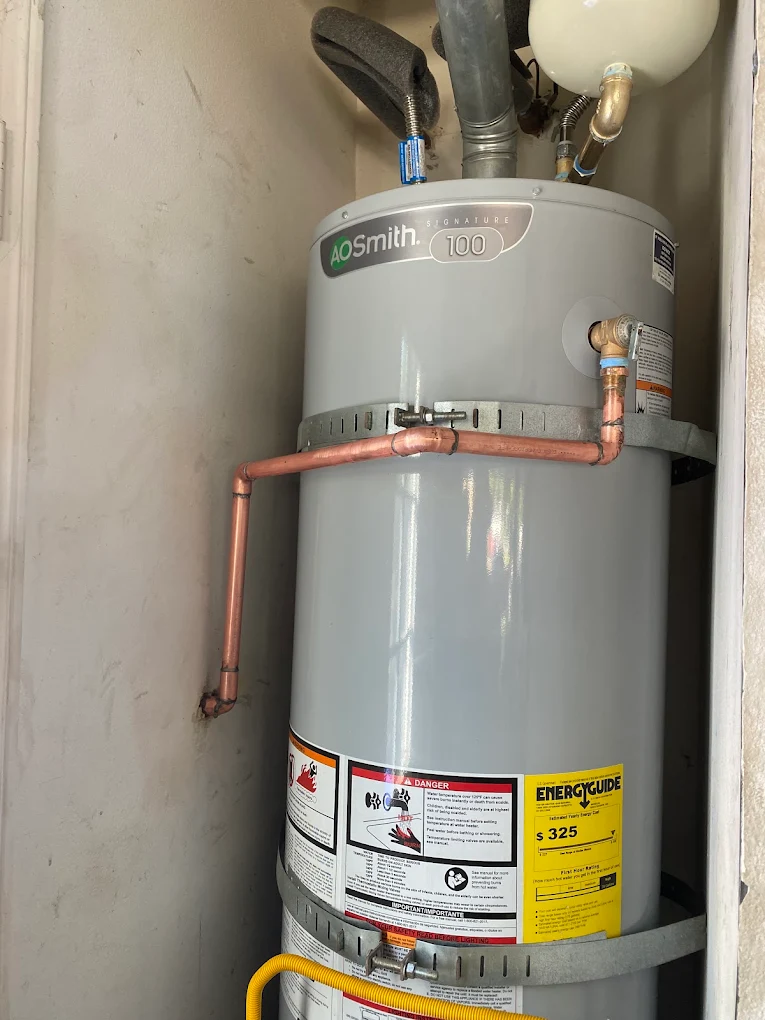
- Water running down from above: a leaking supply line or fitting on top of the tank. Often repairable.
- Condensation: a little moisture when a gas heater first fires on cold water can drip and dry. A puddle that keeps growing isn’t condensation.
- From the tank bottom itself: corrosion inside the tank. Tanks can’t be patched, so this means replacement.
Repair or replace? Many tank heaters last roughly 8–12 years. A 12-year-old tank that’s leaking from the tank is almost always a replacement. A newer heater with a leaking valve or fitting is usually worth repairing.
Is it safe to wait?
Not for long. A slow drip from a valve can wait a day with a towel and bucket, but a leaking tank can fail suddenly and release a lot of water. A small leak can turn into a big repair bill for drywall, flooring and stored belongings. Shut off the water to the tank now, even if you schedule the repair for tomorrow.
Checklist: what’s safe to check yourself
- Turn off the energy. Gas: turn the gas control knob to OFF (or PILOT, per the label). Electric: switch off the water heater’s breaker.
- Close the cold-water supply. Turn the valve on the cold inlet pipe on top of the tank clockwise until it stops.
- Protect your things. Move stored items away, put down towels, and set a pan or bucket under the drip.
- Find the source. Dry the area, then watch: top fittings, T&P pipe, drain valve, or the tank bottom itself.
- Check the age. Read the label’s serial number for the manufacture date so you can make a repair-or-replace decision.
Don’t touch the burner area or electrical panels while standing in water, and don’t open the T&P valve or try to drain a hot tank yourself. The water can scald.
When to stop and call
Call a licensed technician if:
- Water is coming from the tank itself
- The T&P relief valve is releasing water
- Water is near outlets, cords or the electrical panel
- You can’t shut off the cold-water valve
- The tank is around 10 years old or more
If you smell gas (rotten eggs) near a gas water heater or anywhere in the home: leave the house, then call the gas company or 911. Don’t flip switches, light anything or use your phone until you’re outside.
If water is spreading: shut off the water at the fixture’s valve or the home’s main shutoff, and stay away from outlets, cords and the electrical panel if water is near them.
How to prevent it next time
- Flush the tank about once a year to slow sediment and corrosion.
- Have the anode rod checked every few years. It sacrifices itself so the tank doesn’t rust.
- Install a drain pan with a drain line, especially for garage or attic heaters.
- Keep the area around the heater clear so you notice drips early.
What a Henley’s technician checks
The source of the leak, the tank’s age and condition, the valves and fittings, gas venting or electrical parts, and code items like seismic straps and the relief-valve line. You get honest repair-or-replace options with prices before any work.
Henley’s has been family-owned since 1983. Bryan Henley started it, and owner Billy Henley runs it today. We still do the trade the way it’s supposed to be done: an honest diagnosis, no upsell pressure, the aim of fixing it right the first time, and treating your home like it’s ours.
Neighbors have left 300+ Google reviews for our Corona location. Licensed local technicians, CA Lic. #776658, serving Riverside, San Bernardino and Orange counties.
Call (909) 883-8827 or request service. Plumbing estimates are free, and you get the price before any work starts.
¿Prefiere español? Llame al (909) 883-8827 y pida hablar en español. Prefer Spanish? Ask when you call, and we’ll get someone who speaks Spanish on the line.
Related: Water heaters | Repair or replace your water heater? | How long should a water heater last? | Water heater popping noise | Leak detection
Serving Riverside, San Bernardino and Orange counties. Riverside County: Corona, Riverside, Norco, Eastvale, Jurupa Valley, Moreno Valley, Calimesa. San Bernardino County: San Bernardino, Fontana, Rancho Cucamonga, Ontario, Redlands, Rialto, Upland, Chino. Orange County: Yorba Linda, Orange, Fullerton, Placentia.
Frequently asked questions
What should I do if my water heater is leaking from the bottom?
Turn off the water heater’s power or gas, close the cold-water supply valve on top of the tank, and keep the area dry. Then find where the water is coming from. A drip from the drain valve or relief-valve pipe can often be fixed, but water coming from the tank itself usually means the tank has rusted through and needs to be replaced.
Is it safe to wait?
Only briefly. Shut off the heater and the cold-water valve right away. A leaking tank can fail suddenly, and a small leak can turn into a big repair bill.
Can a water heater leaking from the bottom be repaired?
If the water is coming from the drain valve, a fitting or the relief-valve pipe, it can often be repaired. If the tank itself is leaking, it needs to be replaced, because tanks can’t be patched.
My water heater is 12 years old. Should I repair or replace it?
Many tank heaters last about 8–12 years. If a tank that age is leaking or rusting, replacing it is usually the smarter choice. If the problem is a small part and the tank is sound, a repair may still make sense.
Is a leaking water heater dangerous?
It can cause water damage, and a failing relief valve or gas problem can be a safety issue. Shut off the energy and cold water, stay away from electrical parts in standing water, and call a plumber.
How much does it cost to check a leaking water heater?
Henley’s plumbing estimates are free, and you get the price before any work begins.